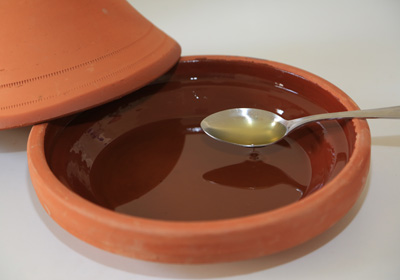
This deep terracotta dish topped with a conical lid is an indispensable utensil in all Moroccan homes.
Our enthusiasm for dishes cooked in the Tajine certainly stems from the incomparable flavors it imparts to the ingredients that simmer for a long time.
There are three types of tagines, here are some tips and tricks for better use and preservation of them.

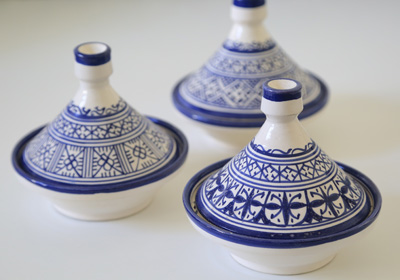
– The glazed earthenware tagine, decorated with designs, is used as a serving dish and is never placed directly on the stove. To keep food warm, it must be reheated before serving, either in a hot oven (turned off) or by pouring hot water over it. This type of tagine is also used as a decorative accessory.

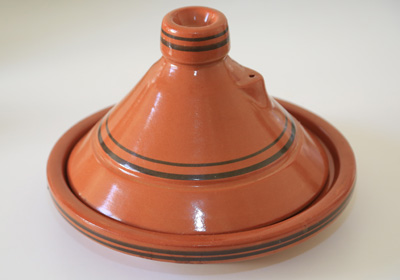
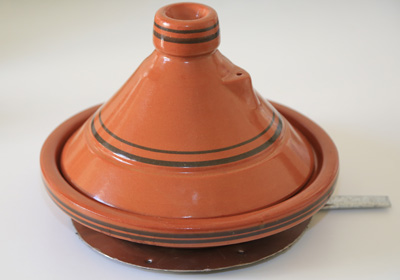
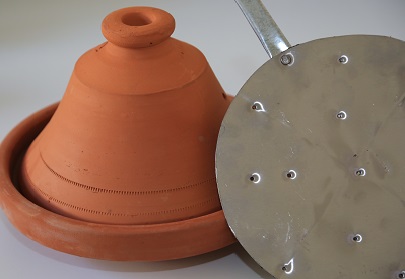
The glazed earthenware tagine is traditionally used for cooking over embers (brazier or barbecue). However, the newer generation of tagines can be used on a gas hob. For this, it is recommended to place a heat diffuser (a perforated metal plate) between the flames and the tagine. Regardless of the cooking method chosen, the fire must be low, otherwise the tagine may crack during cooking if exposed to high flames.


The unglazed earthenware tagine is also suitable for cooking but requires treatment before its first use for better preservation. Begin by soaking the tagine in a large volume of water for three days before letting it air dry. Once the tagine is dry, fill it with oil and let it absorb the fat for three days, then remove the excess oil. Treated in this way, the tagine will be less prone to sticking and will better withstand the heat that causes cracking.

Line the tagine with parsley and coriander stems or onion rings before placing the meat and vegetables inside; this helps to flavor the ingredients and protect them so they don't stick during cooking.
Avoid wetting the Tajine during cooking with cold water or broth, always use hot liquids.
Good to know: Tagra, A deep, round or oval earthenware dish without a lid is widely used in northern Morocco for cooking fish dishes or for reheating and serving. Bissara. It must be treated before its first use by following the steps mentioned for the treatment of unglazed terracotta tagine.